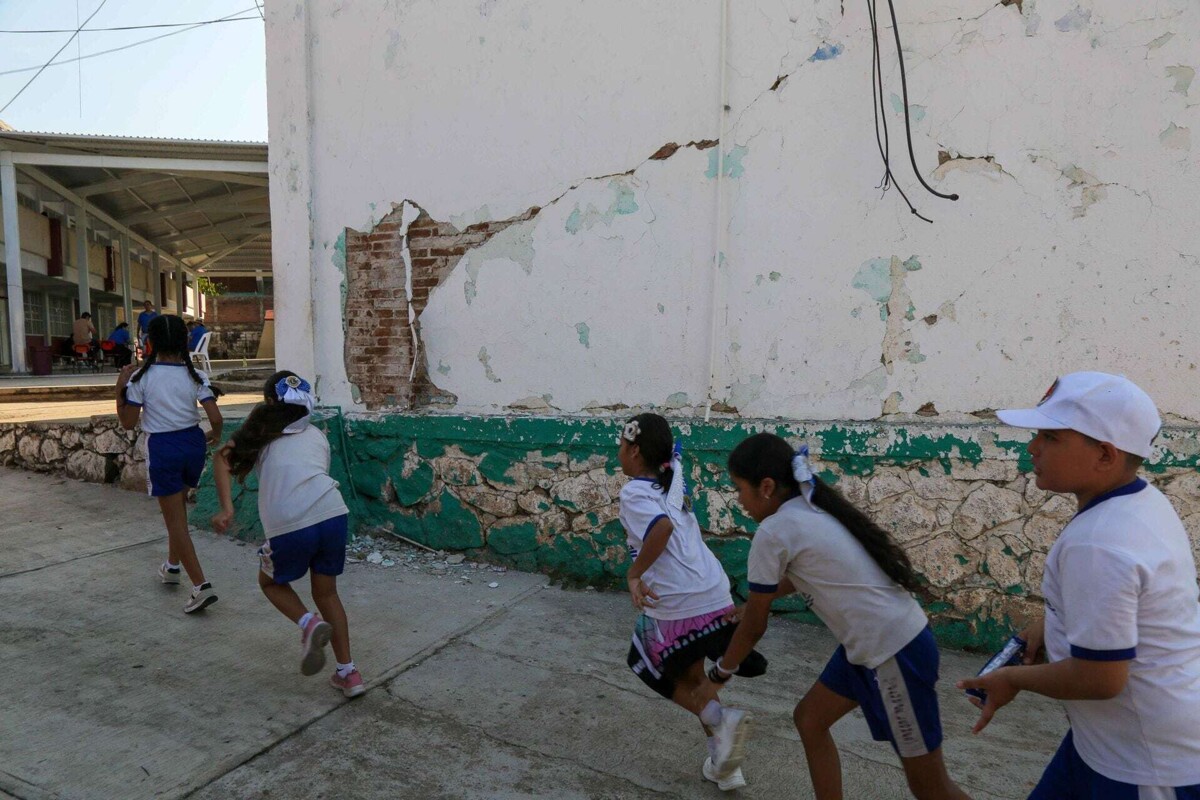
Guaranteeing that no young person is left out of the education system directly connects to the public security strategy: less school dropout implies less recruitment by criminal economies and greater social cohesion. School attendance is directly proportional to building peace. Thus, educational reintegration ceases to be a sectoral issue and becomes a preventive policy for national security. However, the challenge will be to prevent the discourse from getting stuck in forums and diagnoses. Mexico has accumulated enough studies on school dropout; what has been lacking is institutional continuity and effective evaluation. From the Congress, the central question will be whether there is the will to translate this narrative into normative reforms, flexible operational rules, and sustained funding. The SNTE has already taken a position: the school can once again welcome those who left, but it cannot do it alone. The message is clear for legislators and fiscal authorities: school attendance depends not only on the classroom, but on the comprehensive design of the social state. In times where polarization dominates public debate, educational reintegration could become one of the few possible consensus points. No one, at least in political discourse, can oppose girls, boys, and young people returning to school. The real test will begin when the time comes to allocate resources and measure results. Because something the forum promoted by the SNTE made clear is that school failure can no longer be explained as an individual decision. It is an indicator of the functioning—or abandonment—of institutions. For years, school dropout was presented as an individual decision associated with a lack of interest or discipline; now it is posed as a structural consequence of insufficient public policies, social inequality, and institutional absence. The nuance is profoundly political. Because if young people are not deserting, but are being expelled, then the responsibility ceases to fall on the student and shifts to the State. And this week, from Mexico City, the National Union of Education Workers (SNTE) launched a message that transcends the pedagogical realm to fully install itself on the national public agenda: students do not abandon school, they are expelled by the system. The statement by the national leader of the SNTE, Alfonso Cepeda Salas, during the National Forum 'Towards a Strategy for School Permanence' is no minor matter. It changes the focus of the debate. And that is where the real discussion begins. The diagnosis presented by the SNTE places school attendance as a multidimensional phenomenon: poverty, insecurity, academic lag, emotional health, the distance between school and community, as well as administrative rules that end up excluding rather than integrating. It is not just about scholarships—although their positive effects are recognized—but about building school environments capable of retaining and reincorporating students. The proposal coincides with a worrying reality: Mexico faces a generation marked by educational disruption after the pandemic, the growth of informal economies that absorb young people ever earlier, and a social environment where violence directly competes with the school as a space of belonging. The SNTE seeks to position itself not only as a labor actor but as a designer of public educational policy. In times of artificial intelligence and digital education, human contact remains the main factor for school permanence. The message also has a political reading towards 2027 and beyond. Education is once again shaping up as an axis of governmental legitimacy. In educational policy, words matter. And it does so at a key moment. At the forum, the alignment between the government and the teaching profession around a common narrative was confirmed: to replace the concept of 'dropout' with that of 'inattention'. The semantic difference implies institutional co-responsibility and opens the door to new early intervention strategies. Behind the discourse appears a greater objective: to prevent educational reintegration from becoming just another social program and to transform it into state policy. The SNTE was emphatic on one point that particularly resonates in the Legislative Branch: results cannot be demanded from the teaching profession without a sufficient budget or dignified conditions for teaching. It is, in essence, a message directed at the budgetary discussion that will inevitably reach the Chamber of Deputies. Because school attendance costs. It costs tutoring, infrastructure, socio-emotional accompaniment, teacher training, cultural and sports activities, early warning systems, and inter-institutional coordination. Everything that for decades was considered accessory today appears as indispensable to avoid educational exclusion. In other words, educational reintegration will not be possible without real budgetary reallocations. The New Mexican School bets, at least in discourse, on turning each school into a space for comprehensive accompaniment of the student's life project. The challenge will be to move from the pedagogical concept to daily operation in classrooms that still face structural shortcomings. It must be remembered that nothing replaces the presence of the teacher.